
Eligibility, Courses, Exams & Career Outlook
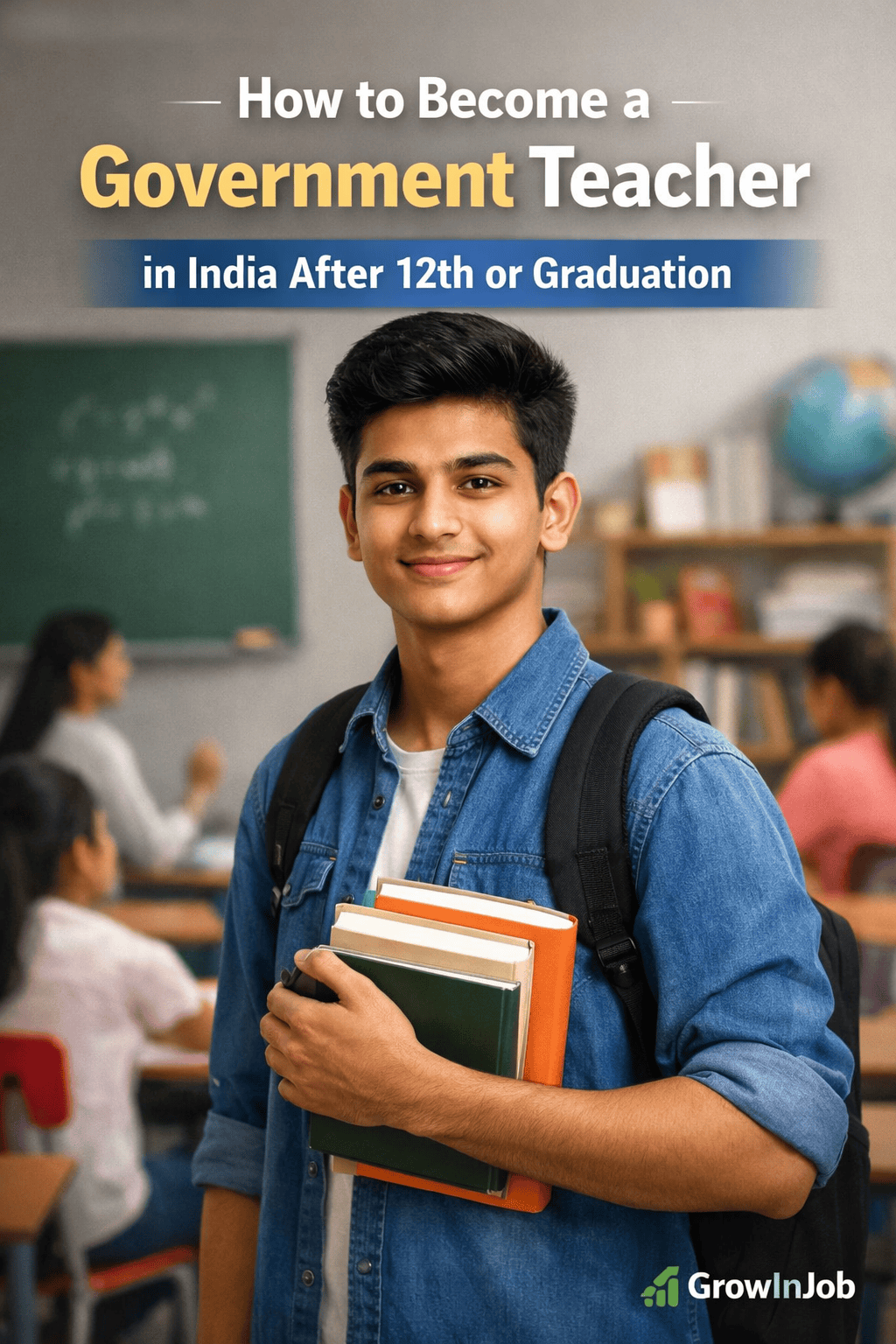
This article focuses on becoming a teacher in India, highlighting the pathways and qualifications for government and public sector schools. Private schools and institutions also offer rewarding teaching careers, which we will cover in a separate article—stay tuned for that!
Whether you are aiming to become a Primary Teacher (PRT), Trained Graduate Teacher (TGT), or Post-Graduate Teacher (PGT), this guide will provide clear steps, recommended courses, and preparation tips to help you navigate your teaching career successfully.
Introduction
India faces a growing demand for qualified teachers. According to the National Education Policy (NEP) 2020, ideally, there should be one teacher for every 30 students. However, in reality, millions of teaching vacancies exist, especially in government schools.
For aspirants, understanding the right educational qualifications, eligibility exams, and career roadmap is crucial. This guide provides practical, up-to-date information, backed by official sources, to help you start your journey confidently.
Why Teaching is a Rewarding Career
Teaching is more than just a job—it’s a chance to shape the future.
Teachers enjoy job stability, structured working hours, and opportunities to make a meaningful impact. Teaching positions in Government Organisations provide secure salaries, promotions, and work-life balance.
👉 For students preparing for board exams alongside career planning, check our complete CUET preparation strategy.
Salary, Career Growth, and Work-Life Balance
- Starting salary: ~₹50,000/month for early-career positions
- Career progression is structured with regular promotions and increments
- Work hours: 6–8 hours/day for a balanced lifestyle
Types of Teachers and Required Qualifications
India classifies teachers based on the classes they teach:
1. Primary Teacher (PRT)
- Classes: 1–5
- Minimum Qualification: 12th pass + D.El.Ed/JBT or 4-year B.El.Ed
- Focus: Basic literacy, numeracy, and foundational skills
2. Trained Graduate Teacher (TGT)
- Classes: 6–8
- Minimum Qualification: Graduation + B.Ed
- Focus: Subject-specific teaching
3. Post-Graduate Teacher (PGT)
- Classes: 11–12
- Minimum Qualification: Post-graduation in relevant subject + B.Ed
- Focus: Advanced subjects and exam preparation
👉 If you’re exploring career options after class 12, also read B.E vs B.Tech: Which degree is better for engineering aspirants.
Note: All candidates need to clear the Central Teacher Eligibility Test (CTET) or respective State TET (TET/STET) to be eligible for most government school roles.
Official CTET Portal: https://ctet.nic.in/
Essential Eligibility Exams
Central Teacher Eligibility Test (CTET)
- Conducted by CBSE, CTET is essential for candidates seeking teaching roles in central schools, such as Kendriya Vidyalayas or Navodaya Vidyalayas.
- Exam pattern: Paper I for primary (classes 1–5), Paper II for upper primary (classes 6–8).
- Subjects include Child Development, Pedagogy, Language, Mathematics, Environmental Studies, and Social Studies.
- CTET February 2026 updates: Times of India coverage
State Teacher Eligibility Tests (TET/STET)
Each state conducts its own eligibility tests. Examples:
- UPTET (Uttar Pradesh)
- HTET (Haryana)
- REET (Rajasthan)
- MAHA TET (Maharashtra)
These exams determine eligibility for state government school teaching positions. Pass these exams to apply for vacancies announced by state recruitment boards.
👉 Want a clear comparison for engineering aspirants? Check JEE Main vs JEE Advanced Guide 2026.
Courses to Become a Teacher
1. B.Ed (Bachelor of Education)
- Duration: 2 years after graduation (or integrated 4-year program)
- Covers pedagogy, psychology, and practical teaching skills
2. ITEP (Integrated Teacher Education Program)
- Combines graduation + B.Ed in 4 years
- NEP-aligned program at universities like DU, JMI, BR Ambedkar University
3. B.El.Ed (Bachelor of Elementary Education)
- 4-year undergraduate course
- Trains students to teach classes 1–5
4. D.El.Ed (Diploma in Elementary Education)
- 2-year program
- Focuses on primary/upper-primary education
5. NTT (Nursery Teacher Training)
- 2-year specialized diploma
- For pre-school and nursery education
Pro Tip: Choose NCTE-approved courses only. Check curriculum, practical teaching sessions, and internship quality before enrollment.
Key Considerations When Choosing Courses
Before enrolling, verify that your course:
- Is NCTE-approved
- Follows NEP-aligned syllabus
- Offers quality practical teaching & internship opportunities
- Is from a reputable institution
| Summarised Course Table | ||
| Course | Duration | Description |
| B.Ed (Bachelor of Education) | 2 years after graduation / 4-year integrated | Prepares candidates for teaching across levels. |
| B.El.Ed (Bachelor of Elementary Education) | 4 years | Integrated program for primary teacher training. |
| D.El.Ed (Diploma in Elementary Education) | 2 years | Focuses on primary/upper-primary teaching. |
| NTT (Nursery Teacher Training) | 2 years | Specializes in pre-primary and nursery education. |
| ITEP (Integrated Teacher Education Program) | 4 years | Combines graduation + B.Ed as per NEP 2020. |
Preparation Strategy
- Start with NCERT textbooks for basic concepts.
- Understand the Exam Pattern
- Solve previous years’ CTET/TET question papers.
- Focus on Child Development, Pedagogy, and Subject Knowledge.
- Take mock tests regularly and assess your performance.
- Maintain a study schedule: 50 minutes study + 10 minutes break.
- Keep sleep, nutrition, and stress management in check.
👉 Students preparing for board exams and teacher career simultaneously can refer to CUET preparation strategy for balancing studies efficiently.
“Teaching is not merely a profession; it constitutes the very foundation of societal development and nation-building. A teacher shapes the knowledge, values, and character of students, thereby influencing the moral and intellectual fabric of society. Since the future of a nation is cultivated within classrooms, the role of a teacher is regarded as both profoundly significant and highly honorable. The profession offers deep personal fulfillment, as educators contribute directly and meaningfully to the growth and development of the next generation.
Particularly for women, teaching represents a highly suitable and rewarding career option. The profession generally provides a balanced work schedule, enabling a more harmonious integration of professional responsibilities and family life. Moreover, government teaching positions offer job security, regular remuneration, paid leave, and additional institutional benefits, thereby strengthening economic stability and financial independence.
Women educators also serve as influential role models for female students, fostering self-confidence and reinforcing the value and transformative power of education. Through their dedication and leadership, they contribute significantly to positive social change.
Thus, teaching emerges as a profession that offers women dignity, stability, security, and a meaningful opportunity to serve society.”
Pooja Mishra, Lecturer Commerce
Government Boys School, Gariyaband, Chhattisgarh
Teacher Recruitment Outlook
- States like Haryana, Maharashtra, and Rajasthan have recently announced PGT and TGT vacancies.
- Government teaching roles provide job stability, structured work hours, and good career growth.
- Recruitment boards periodically adjust eligibility cut-offs to fill teacher vacancies.
Example: HPSC PGT Recruitment 2026
Frequently Asked Questions (FAQs)
Q: Can anyone become a teacher without a B.Ed?
A: Yes, for some primary-level roles, D.El.Ed or B.El.Ed is sufficient. For upper primary, graduation + B.Ed is usually mandatory.
Q: What is the minimum qualification to become a government teacher in India?
A: For primary teaching (PRT): 12th pass + D.El.Ed / JBT or 4-year B.El.Ed. For higher classes (TGT, PGT): Graduation/Post-graduation + B.Ed. Clearing CTET or State TET is mandatory.
Q: What courses are best to pursue a career as a government teacher?
A:
- B.Ed (2 years after graduation)
- B.El.Ed (4 years, undergraduate)
- D.El.Ed / D.Ed (2-year diploma)
- ITEP (4-year integrated program under NEP)
Tip: Ensure NCTE approval and practical training.
Q: What is the difference between PRT, TGT, and PGT?
A: PRT teaches classes 1–5, TGT teaches 6–8, and PGT teaches 11–12 with subject specialization.
Q: Is CTET mandatory for private schools?
A: Many recognized private schools require CTET, especially if they follow CBSE or state norms.
Q: Do private schools require CTET or TET?
A: Most reputed private schools require TET/CTET for hiring, along with a B.Ed/D.El.Ed qualification.
Q: How long does teacher preparation take?
A: No size fits all. Each person has different scenario. Generally, with focused study, 3–6 months of preparation is often enough for TET/CTET exams, depending on prior knowledge.
Q: Which government jobs can I apply for after clearing CTET?
A: Apply for PRT, TGT, PGT vacancies in central and state schools via official recruitment portals.
Q: Are government teaching jobs gender-specific?
A: No. Teaching is gender-neutral. Both men and women can pursue teaching careers at all levels.
Q: What is the expected starting salary?
A: Around ₹50,000 per month for early-career positions.
Q: Where can I find recognized teaching courses and job notifications?
A:
- NCTE-approved colleges/universities
- Official government portals
- Central & state education boards
Conclusion
Becoming a teacher in India is a rewarding and stable career choice. With the right qualifications, courses, and exam preparation, you can pursue teaching in government, central, or state schools. Remember: planning, practice, and perseverance are key.
GrowInJob.com wishes aspiring teachers success on their journey. Stay tuned for our next article on private teaching careers.
Disclaimer
This article uses common public-domain knowledge, official exam guidelines, and news references from trusted sources. It is intended to guide students and aspirants in understanding eligibility, courses, and exams for teaching careers. No copyrighted or proprietary content has been reproduced.
Interactive Quiz: Are You Ready to Become a Teacher in India?
Select the best answer for each question. You will get instant feedback and your final score at the end.